
THE FRUGAL PLATFORM

Cost Control Built into Your SDLC

Frugal shifts cost left. We show engineers what their code will cost as they're writing it, flagging waste early and handing over the fix.
Free to try for 30 days, no commitment to continue.
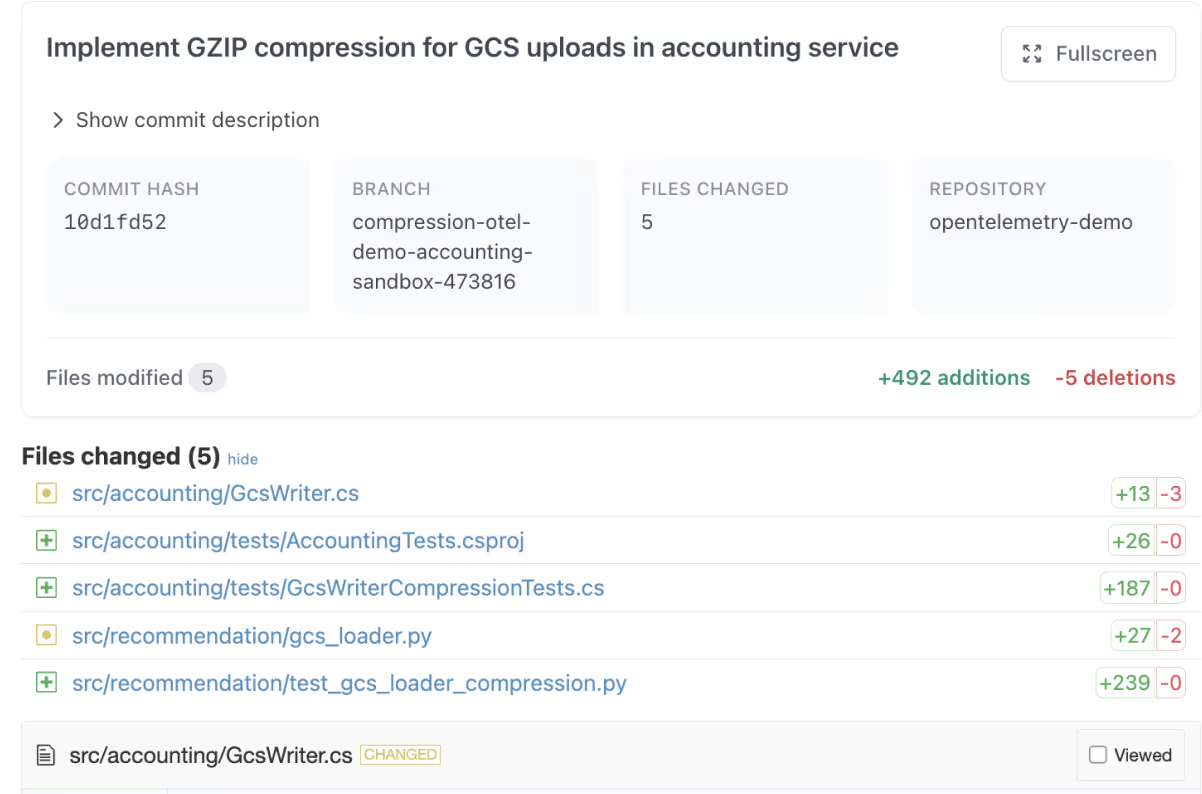
GitHub commit page showing implementation of GZIP compression for GCS uploads in accounting service with 5 files changed and 492 additions plus 5 deletions.
200+
cost traps detected
19
services covered
05
cloud & AI providers
HOW FRUGAL WORKS

Prevention

Cost awareness is built in, so efficient code ships by default.

Optimization

Waste already in production gets fixed with a ready-to-merge code patch.

Attribution

Every dollar traced to the code path that caused it.

Prevention

Cost-efficient by default

Build cost control into how you ship
Most cloud waste is hiding in the code. Frugal puts cost in front of engineers while they build and review, so cost-efficiency becomes a part of how your team ships.
STAGE
Plan & code
Review & ship
Observe & improve
WITHOUT FRUGAL
Cost shows up on the bill, a month after the code ships
Cost regressions merge unnoticed
Waste is found by accident, months later
WITH FRUGAL
Estimate the cost impact of a change while building, review coding plans for cost-efficiency
Catch cost regressions before merge, flagged in review the same place you'd catch a failing test
Built-in cost feedback loop for your coding agent

Examples of Cost Issues Found in Frugal's PR Review

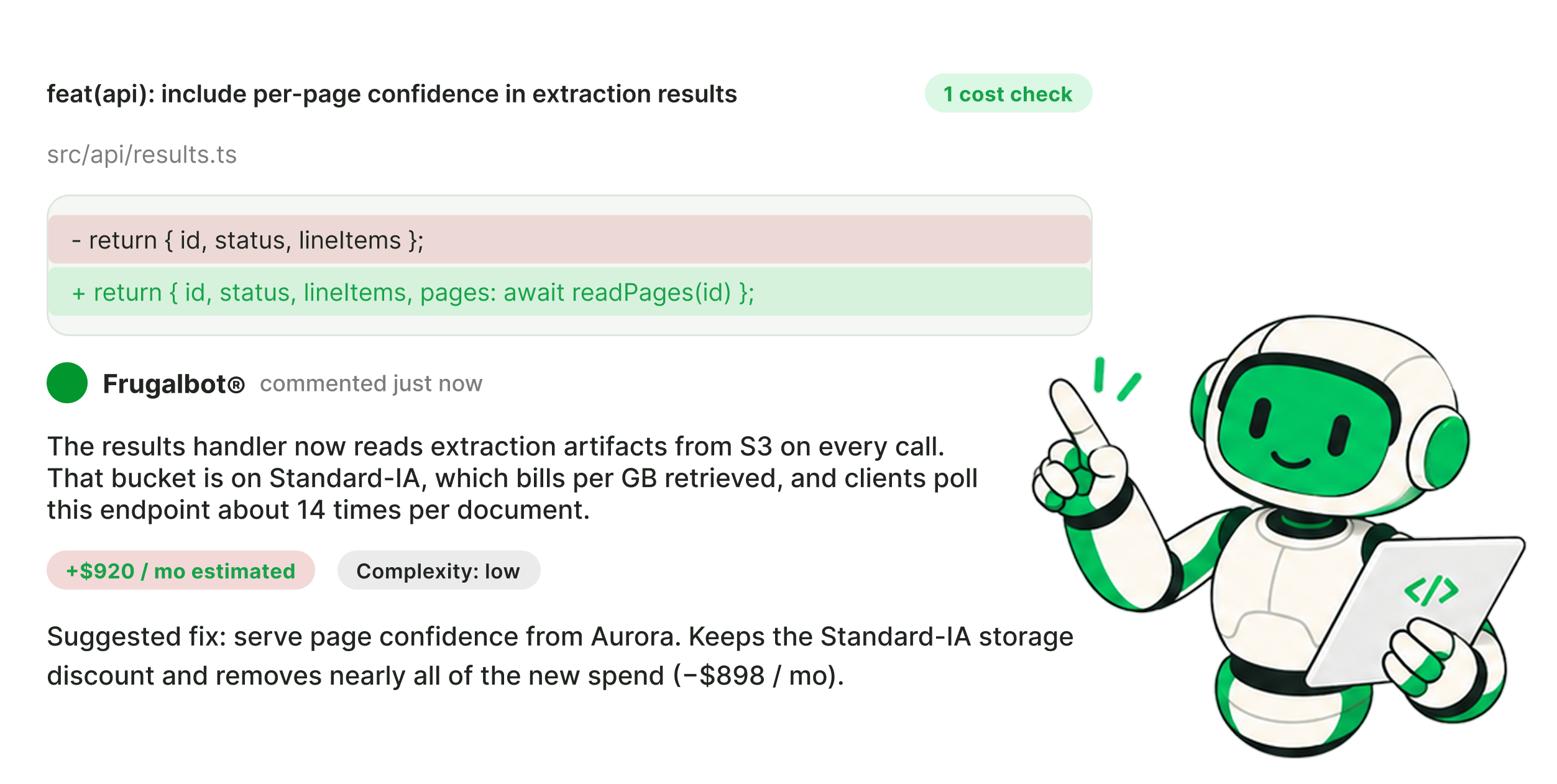
Frugal reviews both Terraform and Application code pull requests for cost impact. We estimate the price of the change and recommend fixes to reduce cost.

IN THE PULL REQUEST
A few-line API change starts reading archived files on every request. Frugal prices the change in the review, explains the jump, and lays out cheaper options.

Optimization

Every fix arrives as a code patch

Fix the waste already in production
Frugalbot® finds over 200 types of waste across 19 services on AWS, GCP, Datadog, and AI providers, and ships each fix as a Frugal Fix: a ready-to-merge code patch with the savings quantified.

Where the waste hides

Databases

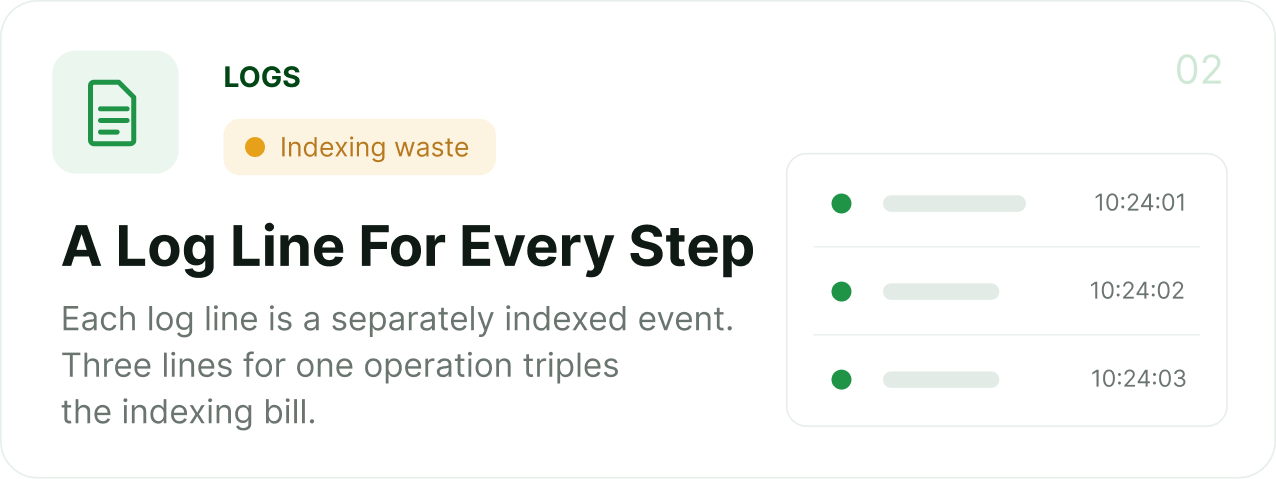
A query that reads the whole table for a handful of rows still gets billed for every row scanned. Frugal Fixes flag the pattern and ship an indexed or filtered version that returns the same result for a fraction of the scan.

AI APIs

A prose response where structured output would do costs more to generate and more to parse. Frugal identifies where these calls should use structured JSON, typically cutting output tokens 50 to 80 percent.

Kubernetes

Right-sized requests and limits, plus fixes for idle and over-provisioned workloads across GKE and EKS.

Full coverage

CATEGORY PATTERNS SERVICES
Databases 59 Firestore, AlloyDB, Cloud SQL, DynamoDB, RDS
Logging 41 Cloud Logging, CloudWatch Logs, Datadog Logs
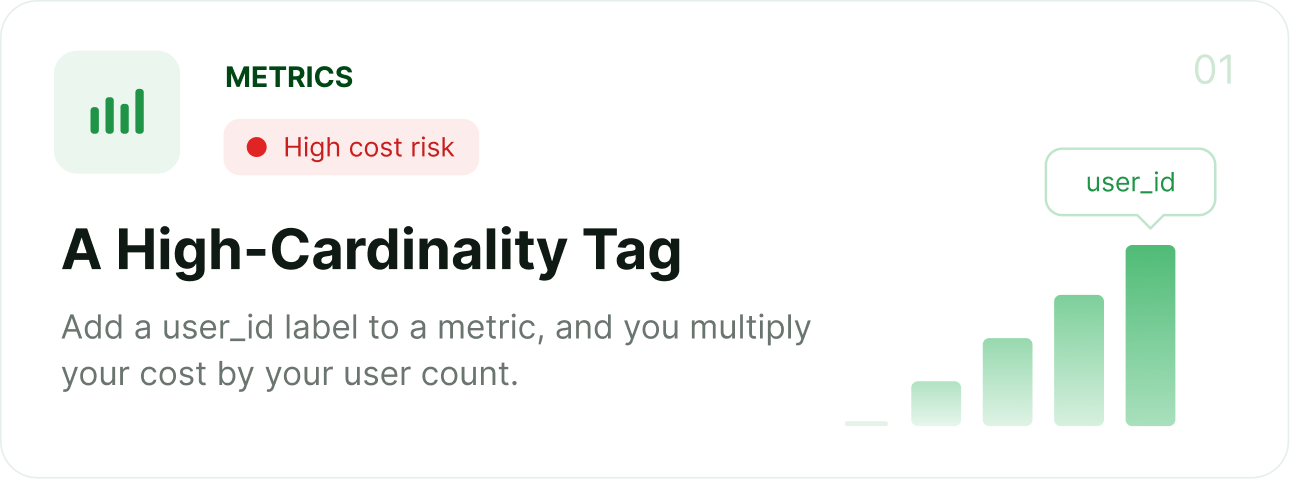
Metrics 25 Cloud Monitoring, CloudWatch Metrics, Datadog Metrics
AI APIs 22 Anthropic Claude, OpenAI
Serverless 20 Google Cloud Functions, AWS Lambda
Storage 15 Google Cloud Storage, Amazon S3
Kubernetes 12 Google Kubernetes Engine, Amazon EKS
Frugal Fix fix/orders-scan-index · ready to merge

Index orders.status to stop a full-table scan

Cloud SQL · opened by Frugal · 3 files changed

EST. SAVINGS
$3,480/mo
COMPLEXITY
Low
SCAN CUT
94%
api/orders.py
- SELECT * FROM orders WHERE status = 'open'
+ SELECT id, total FROM orders WHERE status = 'open'
migrations/0042_add_orders_status_index.sql
+ CREATE INDEX idx_orders_status ON orders (status)

Every Frugal Fix comes with a savings estimate and a complexity rating, so you can prioritize the ten fixes that matter before the ninety that don't.

Attribution

From a line item to a line of code

Break spend down to where engineers can act
Frugalbot® analyzes your source code alongside observability & billing data, mapping each dollar of spend to the specific component or code path driving it, so the team that owns that code can see what's behind the cost and fix it.

Pick apart a bill

See spend broken down by the code, query or feature actually driving it, instead of the service line item on an invoice.

Put the output to work

Once spend is attributed to a specific piece of code, feed it straight into your coding agent. Point it at the query, function or prompt pattern and have it generate the fix.

~/checkout · agent session
YOU

Check with Frugal on our log costs for this service and fix the biggest one.

AGENT

I checked with Frugal: retry_handler.go drives $18.3k/mo of log spend. The retry loop logs the full request body on every attempt. Sampling at 5% and dropping the payload keeps the debug signal and removes ~$16.4k/mo. Patch ready in 2 files.

- log.Info("retry", "body", req.Body)
+ if sample(0.05) { log.Info("retry", "id", req.ID) }
NOT READY TO BUY?

Start With a Free Audit

A report you can act on this sprint, plus a plan for keeping waste out of your codebase going forward. One repo, real numbers, and nothing to commit to.

WHAT YOU GET
Cost attribution down to the exact function, log or query driving spend
Your top 5 highest-impact fixes, checked against 200+ known waste patterns
A look back at your last 200 PRs, showing what would have been caught at review
A shift-left plan that fits your CI/CD without slowing engineering down
1 Connect one rep
2 Attribute spend
3 Ship first fixes
black blocks image

See how Frugal works

A 30-minute walkthrough of code analysis, cost insights, and AI-generated fixes.

Take Frugal for a live test drive

Explore how Frugal scans your code and cloud services to find waste, recommend optimizations, and generate ready-to-use fixes in a secure, read-only environment.